
What you need to know
- DHSC published Fit for the future: 10 Year Health Plan for England on 3 July 2025 as command paper CP 1350.
- The plan's three shifts are hospital to community, analogue to digital and sickness to prevention.
- 43 neighbourhood health pilot sites started on 9 September 2025, and 250 neighbourhood health centres were announced on 24 November 2025.
- The first six advanced foundation trusts were approved in May 2026 and two trusts were designated eligible for IHO contracts in July 2026.
- The Health Bill, which abolishes NHS England and provides the framework for a single patient record, was at Lords committee stage as of November 2026.
The 10 Year Health Plan is the government’s programme for reforming the NHS in England, and for anyone who runs, funds or sells to the health service it now shapes budgets, contracts and structures. Published as Fit for the future: 10 Year Health Plan for England on 3 July 2025, it promised three shifts in how care is delivered and a new operating model for the NHS, with many targets set for 2035. Sixteen months on, some parts are in force, some are before Parliament and some remain ambitions. This guide sets out what the plan says, what has happened since and what it means commercially, as of November 2026.
What the 10 Year Health Plan is and who published it
The Department of Health and Social Care (DHSC) published the plan on 3 July 2025. The GOV.UK page also lists the Prime Minister’s Office, the then Prime Minister Keir Starmer and the then Health and Social Care Secretary Wes Streeting. Fit for the future carries the command paper number CP 1350. The full PDF runs to 171 pages and the executive summary to 11 pages. DHSC added a revised PDF with a correction note on 15 July 2025, and on 30 July 2025 updated the executive summary to include the first edit from the correction slip.
The 10 Year Health Plan has nine chapters after a foreword and an executive summary: the case for change; from hospital to community; from analogue to digital; from sickness to prevention; a devolved and diverse NHS with a new operating model; a new transparency of quality of care; the workforce; innovation; and productivity with a new financial foundation. It closes with an afterword.
Wes Streeting presented it to the House of Commons the same day. In his statement he said: “We will turn our National Health Service into a Neighbourhood Health Service.” He tied the 10 Year Health Plan to an extra GBP 29 billion a year for the NHS by the end of the Spending Review period, and said that “the majority of the 135 million outpatient appointments done each year will be moved out of hospitals.”
The 10 Year Health Plan’s political sponsors have since moved on. GOV.UK records that Wes Streeting left the government on 14 May 2026 and that James Murray was Health and Social Care Secretary from 14 May 2026 to 20 July 2026. It also records that Andy Burnham became Prime Minister on 20 July 2026, succeeding Sir Keir Starmer, and that Yvette Cooper was appointed Health and Social Care Secretary the same day. The Health Bill, which carries several of the plan’s structural changes, continued through Parliament after both changes.
The three shifts in the 10 Year Health Plan
The 10 Year Health Plan states: “We will reinvent the NHS through 3 radical shifts”. They are from hospital to community, from analogue to digital and from sickness to prevention. Each comes with dated commitments in the executive summary.
- Hospital to community. A neighbourhood health centre (NHC) “in every community, beginning with places where healthy life expectancy is lowest”, open at least 12 hours a day and six days a week; 95% of people with complex needs to have an agreed care plan by 2027; and at least double the number of people offered a personal health budget by 2028 to 2029.
- Analogue to digital. “By 2028, the app will be a full front door to the entire NHS.” The executive summary names new NHS App tools including My NHS GP, My Specialist, My Medicines and My Care, and promises single sign on for staff.
- Sickness to prevention. Commitments include halving the gap in healthy life expectancy between the richest and poorest regions, banning the sale of high-caffeine energy drinks to under 16s, mandatory healthy food sales reporting for all large food companies, and a genomics population health service “by the end of the decade”.
Alongside the three shifts, the 10 Year Health Plan commits to restoring the NHS constitutional standard that 92% of patients should begin elective treatment within 18 weeks of referral. It sets the ambition that most outpatient care will happen outside hospitals by 2035, commits up to GBP 120 million to bring the number of mental health emergency departments to around 85, and says all hospitals will be fully AI-enabled within the lifetime of the plan.
The plan also wants patient-initiated follow-up to be standard for all clinically appropriate pathways by 2026. DHSC’s later impact statement says the proposals are “at different stages of development and specificity”, with many to be designed and implemented locally.
Neighbourhood health: from promise to pilots
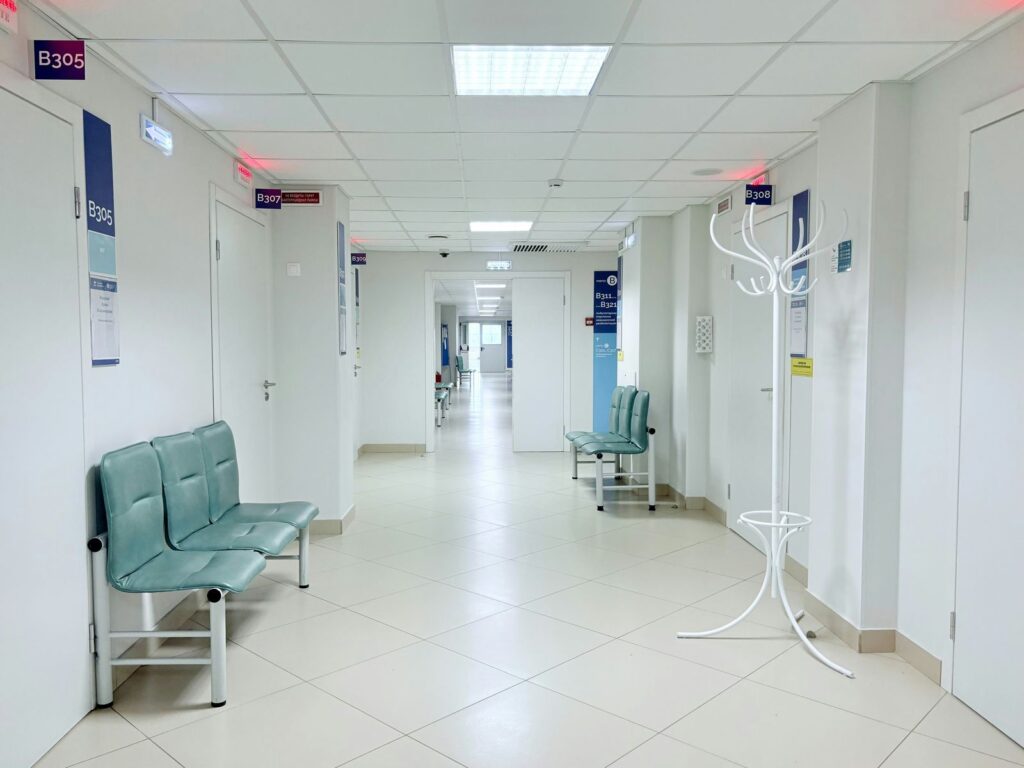
Neighbourhood health is the 10 Year Health Plan’s main structural idea for care outside hospital. The plan describes a Neighbourhood Health Service organised around neighbourhood teams, with NHCs as physical bases. The executive summary says the government will “introduce 2 new contracts, with roll-out beginning next year”, meaning 2026, and will end “the 8am scramble” for GP appointments by training thousands more GPs.
Delivery began with pilot areas. On 9 July 2025 DHSC and NHS England said they would work with “over 40 places” and that the first sites would start rolling out neighbourhood health programmes from September. On 9 September 2025 the government named 43 wave 1 sites, selected as pioneer areas for neighbourhood health services and aimed at working class areas with the lowest life expectancy and longest waits. The programme began that day, backed by GBP 10 million.
Capital followed. On 24 November 2025 HM Treasury and DHSC announced 250 new neighbourhood health centres, described as health “one stop shops”, with more than 100 to open by 2030. They are to be “delivered through a combination of Public-Private Partnerships and public investment”. The same release committed GBP 300 million of new capital investment to NHS technology. The 10 Year Health Plan had said a public private partnership business case for NHCs would be developed, with a final decision at the autumn Budget.
NHS England’s Medium Term Planning Framework, published on 24 October 2025 and covering 2026/27 to 2028/29, turned part of this into planning rules. It tells systems to ensure funding and commissioning cover “a minimum 12 hour ‘community urgent care’ offer”. It asks NHS organisations to set out their plans, “demonstrating how they will implement the 3 shifts set out in the 10 Year Health Plan while improving productivity”.
Digital: the NHS App, the single patient record and AI
The analogue to digital shift centres on the NHS App. Besides the 2028 “full front door” commitment, the plan says My NHS GP, an AI-enabled tool in the app, will arrive by 2028, and that by 2028 the NHS will “support more patients to book into an appropriate urgent care service for them, via 111 or the app”. The Medium Term Planning Framework, which applies the three shifts to NHS planning, asks systems to make at least 95% of appointments across all care settings available through the NHS App after appropriate triage.
The second pillar is a single patient record, which the plan says will “enable more co-ordinated, personalised and predictive care”. That needs legislation. The Health Bill summary fact sheet says the bill provides the framework for a “new single patient record”, for use by clinicians “as early as mid-2027 for some specialties”, with the ambition that from 2028 all patients in England will have access to a core set of their data. DHSC’s impact statement, published in January 2026, says the record “is expected to take several years” to establish and that the project could take longer than expected.
On data and research, the 10 Year Health Plan creates a Health Data Research Service with the Wellcome Trust, backed by up to GBP 600 million of joint investment. It names five technologies it wants adopted at scale: data, AI, genomics, wearables and robotics. Specific commitments include supporting the Generation Study as it sequences the genomes of 100,000 newborn babies, making wearables standard in preventative, chronic and post-acute NHS treatment by 2035, and expanding surgical robot adoption from 2026.
Regulation is moving in parallel. Our digital health coverage has tracked how the UK accepted all 44 recommendations on regulating AI in healthcare, which matters for any vendor hoping to sell AI tools into the “fully AI-enabled” hospitals the plan describes.
The new operating model and NHS structures
Chapter 5, “a devolved and diverse NHS”, changes who does what. Its main commitments in the executive summary are:
- Combine NHS England with DHSC, “reducing central headcount by 50%”.
- Make integrated care boards (ICBs) “the strategic commissioners of local healthcare services”, build ICB capability and close commissioning support units.
- Introduce a system of earned autonomy and “a new failure regime” where local services consistently underperform.
- Set the ambition that by 2035 every NHS provider should be a foundation trust (FT), and give the best FTs the chance to hold the whole health budget for a population as integrated health organisations (IHOs).
- Make ICBs coterminous with strategic authorities by the end of the plan “wherever feasibly possible”.
- Publish league tables that rank providers against key quality indicators, “starting this summer”.
The 10 Year Health Plan speaks of combining NHS England with the department. The formal abolition of NHS England, with the transfer of its functions, is being legislated through the Health Bill. The table below sets each structural commitment against what had happened by November 2026.
| Commitment | Timing in the plan | Position as of November 2026 |
|---|---|---|
| Provider league tables | From summer 2025 | Launched in September 2025; Q4 2025/26 tables published 11 June 2026 |
| Neighbourhood health centres | One in every community | 43 wave 1 sites from 9 September 2025; 250 centres announced, more than 100 by 2030 |
| Foundation trusts and earned autonomy | Every provider an FT by 2035 | First 6 advanced foundation trusts approved May 2026; up to 16 trusts to be assessed during 2026 to 2027 |
| Integrated health organisations | Designate in 2026, operational in 2027 | Two trusts designated eligible in July 2026; expected to be operational in 2027 |
| NHS England combined with DHSC | Not dated in the summary | Health Bill at Lords committee stage; government intends abolition by March 2027, subject to Parliament |
| Fewer, larger ICBs | Coterminous with strategic authorities by end of plan | 36 ICBs from 1 April 2026, down from 42 |
The advanced foundation trust route is NHS England’s mechanism for earned autonomy. On 12 November 2025 the Secretary of State announced that eight trusts would be among those assessed in the first wave, assessed on leadership, quality and financial sustainability, and on how they work with others and plan to help deliver the three shifts. The Health Bill providers fact sheet says “The first 6 trusts were approved for advanced foundation trust status in May 2026.” It adds that Northumbria Healthcare NHS Foundation Trust and Northamptonshire NHS Foundation Trust were designated as eligible to hold an IHO contract in July 2026 and are anticipated to become operational in 2027.

What has been implemented since July 2025
Implementation of the 10 Year Health Plan has run through NHS England guidance, Treasury announcements and the Health Bill. The main dated steps are:
- 9 September 2025. The 43 neighbourhood health wave 1 sites started. The same day DHSC launched NHS league tables, saying every trust in England would be “ranked quarterly against clear, consistent standards”.
- 24 October 2025. NHS England published the Medium Term Planning Framework for 2026/27 to 2028/29, which asks for “a break-even financial position without deficit support funding by the end of this planning horizon” and the 2% annual productivity ambition “as a minimum”.
- 12 November 2025. In a written statement, Wes Streeting said: “The Government intends to abolish NHS England by March 2027, subject to the will of Parliament.” He said staff reductions across DHSC, NHS England and ICBs would be made by March 2028.
- 24 November 2025. HM Treasury and DHSC announced the 250 neighbourhood health centres and GBP 300 million for NHS technology.
- January 2026. DHSC published an impact statement for the plan, which says “a full costings and benefits assessment is not feasible” and that the pace of delivery over ten years will be subject to future decisions.
- 1 April 2026. The number of ICBs fell to 36 under the Integrated Care Boards (Establishment and Abolition) Order 2026.
- 14 May 2026. The Health Bill was introduced in the Commons. The same day, GOV.UK records, Wes Streeting left the government and James Murray was appointed Health and Social Care Secretary. The bill passed second reading on 1 June and third reading on 8 September 2026, and had its Lords second reading on 13 October 2026, according to the parliamentary record.
- May and July 2026. The first six advanced foundation trusts were approved, and the first two trusts were designated as eligible for IHO contracts.
- 20 July 2026. Andy Burnham became Prime Minister and Yvette Cooper was appointed Health and Social Care Secretary.
League tables are now a recurring publication. NHS England’s segmentation and league tables page places trusts in four segments, from segment 1 with the narrowest range of challenges to segment 4 with the broadest, plus segment 5 as the route into the Recovery Support Programme. Its results page lists the Q4 2025/26 segmentation changes and league tables as published on 11 June 2026, the latest edition listed as of November 2026. We log these milestones on The Tracker.
Money: productivity, payment reform and capital
The 10 Year Health Plan’s finance chapter starts from scale: “Today the NHS accounts for 38% of day-to-day government spending”, a share projected to rise to 40% by the end of the Parliament. It says: “For the next 3 years we have set the NHS a target to deliver a 2% year-on-year productivity gain”. It expects providers to move into surplus, “with the majority of providers achieving that by 2030”.
The main financial levers in the executive summary are:
- All trusts to have the authority to retain 100% of receipts from the disposal of land assets.
- Testing “year of care” payments from the 2026 to 2027 financial year.
- A requirement for NHS organisations to reserve at least 3% of annual spend for one-time investments.
- A public private partnership business case for neighbourhood health centres, and exploration of a mechanism for the NHS to access low-risk pension capital.
The Treasury release of 24 November 2025 said achieving 2% productivity growth would deliver GBP 17 billion of savings over three years, and that NHS capital budgets had been uplifted by more than 20% over the Spending Review period from 2023/24 to 2029/30. The estate those budgets must cover is ageing: we reported that the NHS backlog maintenance bill in England rose to GBP 17.3 billion. DHSC’s impact statement adds that from April 2026 “several integrated care boards (ICBs) will be trialling new financial flows”.
What the 10 Year Health Plan means for providers and suppliers
For NHS and independent providers
For trusts, the 10 Year Health Plan ties freedom to performance. League table position and segment drive oversight, advanced foundation trust status brings what NHS England calls “greater autonomy and financial freedoms”, and IHO contracts would let a small number of trusts hold a population budget from 2027. The plan also says that by 2035 “there will be fewer staff than projected in the 2023 Long Term Workforce Plan”, that it will create 1,000 new specialty training posts and 2,000 more nursing apprenticeships over three years, and that it aims to reduce international recruitment to less than 10% by 2035. Our providers section follows how individual trusts are responding.
Independent and community providers should note the volume shift. If most outpatient care moves outside hospitals by 2035 and NHCs open at least 12 hours a day, six days a week, ICBs would be expected to commission more activity in community settings.
For suppliers and investors
- Technology and data. GBP 300 million of new capital for NHS technology, single sign on for staff, new NHS App functions and the single patient record. The 10 Year Health Plan says “We will streamline procurement of technology” and expects the NHS to “partner more effectively with the health tech industry”.
- Medicines and devices. A move to a single national formulary for medicines “within the next 2 years”, and an expansion of NICE technology appraisals to devices, diagnostics and digital products.
- Life sciences. A target for clinical trial set-up time to fall to 150 days by March 2026, a study to sequence the genomes of 150,000 adults, and the Health Data Research Service.
- Construction, property and finance. 250 neighbourhood health centres through public private partnerships and public investment, retained land receipts for trusts, and possible access to pension capital.
Policy detail for payers and commissioners sits in our policy and payers section. For suppliers, the practical point is that buyers are changing: ICBs are being merged and refocused as strategic commissioners, NHS England’s national functions are moving into DHSC, and a growing number of providers will run with more autonomy over capital and contracts.
What to watch next
- Health Bill in the Lords. As of November 2026 the bill is at Lords committee stage, with sittings scheduled from 28 October to 25 November 2026, according to the Parliament bills service. Report stage, third reading and Royal Assent dates had not been set.
- NHS England abolition. The stated target is March 2027, subject to Parliament. Subject to parliamentary approval, NHS England says most of its direct commissioning functions will transfer to ICBs from April 2027.
- First IHOs and more advanced foundation trusts. IHO models are expected to go live in 2027, and up to 16 trusts are to be assessed for advanced status during 2026 to 2027.
- Digital milestones. The single patient record for some specialties from mid-2027, and the NHS App as a full front door by 2028.
- Workforce. DHSC’s January 2026 impact statement said the plan’s workforce implications would be developed and assessed in a new 10 Year Workforce Plan. The government’s call for evidence on that plan closed on 7 November 2025, and the GOV.UK page linked to no published plan as of November 2026.
- New ministers. On 22 October 2026 DHSC updated its Health Bill summary fact sheet “to reflect the latest legislative proposals, including preserving HSSIB’s current status in legislation”, dropping the plan to move the Health Services Safety Investigations Body into the Care Quality Commission. Further changes would show up in amendments to the bill and in NHS planning guidance.
For the 10 Year Health Plan, with its ten-year horizon, the next twelve months matter most for structures: by the end of 2027 the government expects NHS England to be gone, ICBs to hold most commissioning budgets and the first IHOs to be live. Suppliers and providers that map their contracts and relationships to those new bodies now will be better placed when the transfers happen.
Questions readers ask
When was the 10 Year Health Plan published?
The Department of Health and Social Care published Fit for the future: 10 Year Health Plan for England on 3 July 2025 as command paper CP 1350. The full document runs to 171 pages with an 11-page executive summary. A revised PDF with a correction note was added on 15 July 2025, and the executive summary was updated on 30 July 2025.
What are the three shifts in the 10 Year Health Plan?
The plan sets out three shifts: from hospital to community, through a Neighbourhood Health Service and neighbourhood health centres; from analogue to digital, with the NHS App becoming a full front door to the NHS by 2028; and from sickness to prevention, including a genomics population health service by the end of the decade.
Does the 10 Year Health Plan abolish NHS England?
The plan commits to combining NHS England with the Department of Health and Social Care and reducing central headcount by 50%. Abolition itself is being legislated through the Health Bill, introduced on 14 May 2026. In November 2025 the government said it intends to abolish NHS England by March 2027, subject to the will of Parliament.
What is a neighbourhood health centre?
Neighbourhood health centres are the planned local bases for the Neighbourhood Health Service. The plan says there will be one in every community, starting where healthy life expectancy is lowest, open at least 12 hours a day and six days a week. In November 2025 the Treasury announced 250 centres, with more than 100 to open by 2030.
What are integrated health organisations?
Integrated health organisations are high-performing foundation trusts given a contract to hold the health budget for a defined local population. The plan aimed to designate a small number in 2026. Northumbria Healthcare and Northamptonshire trusts were designated as eligible in July 2026 and are expected to become operational in 2027, once commissioned by their ICB.
What does the 10 Year Health Plan mean for suppliers?
Suppliers face new buyers and new priorities. The plan promises to streamline technology procurement, move to a single national formulary for medicines within two years, extend NICE appraisals to devices, diagnostics and digital products, and build 250 neighbourhood health centres partly through public private partnerships. GBP 300 million of new capital for NHS technology was announced in November 2025.
Sources
Announced plans, figures and dates are as stated in the sources below at the time of publication and can change. Conclusions drawn from them are our reading.
- GOV.UK (DHSC): Fit for the future: 10 Year Health Plan for England, policy paper page (3 July 2025, updated 30 July 2025)
- GOV.UK (DHSC): 10 Year Health Plan executive summary (HTML)
- GOV.UK (DHSC): 10 Year Health Plan, accessible version (HTML)
- GOV.UK (DHSC): Fit for the future: 10 Year Health Plan for England (full PDF) (PDF, 171 pages)
- GOV.UK: Fit for the future, Health and Social Care Secretary's statement (3 July 2025)
- GOV.UK (DHSC): Government takes action to deliver neighbourhood health services (9 July 2025)
- GOV.UK (DHSC): Millions of people to benefit from healthcare on their doorstep (9 September 2025)
- GOV.UK (HM Treasury and DHSC): Chancellor to double down on drive to cut NHS waiting times and rollout of new neighbourhood health centres (24 November 2025)
- NHS England: Medium Term Planning Framework, delivering change together 2026/27 to 2028/29
- Community Pharmacy England: Briefing 026.25, Medium Term Planning Framework key points (PDF, October 2025, gives the 24 October 2025 publication date)
- GOV.UK (DHSC): Landmark NHS league tables launched to drive up standards (9 September 2025)
- NHS England: NHS Oversight Framework segmentation and league tables
- NHS England: NHS Oversight Framework, NHS trust performance league tables process and results (Q4 2025/26 tables published 11 June 2026)
- NHS England: Advanced foundation trusts
- NHS England: Integrated care boards in England (updated April 2026)
- NHS England: How commissioning is changing
- UK Parliament: Written statement, Transforming our health service (HCWS1051) (12 November 2025)
- GOV.UK (DHSC): Health Bill collection
- GOV.UK (DHSC): Health Bill summary fact sheet (first published 19 May 2026)
- GOV.UK (DHSC): Health Bill summary fact sheet, publication page and change notes (updated 22 October 2026)
- GOV.UK (DHSC): Health Bill providers fact sheet (updated 9 September 2026)
- UK Parliament Bills API: Health Bill (current stage, Lords committee)
- UK Parliament Bills API: Health Bill stages
- GOV.UK (DHSC): Impact statement, 10 Year Health Plan (PDF, January 2026)
- GOV.UK (DHSC): 10 Year Workforce Plan, call for evidence (closed 7 November 2025)
- GOV.UK: Secretary of State for Health and Social Care
- GOV.UK: Prime Minister
- GOV.UK: Past Prime Ministers (lists Sir Keir Starmer, 2024 to 2026)
- GOV.UK (Prime Minister's Office): Appointments, 14 May 2026 (14 May 2026)
- GOV.UK: The Rt Hon James Murray MP (Health and Social Care Secretary 14 May 2026 to 20 July 2026)
- GOV.UK (Prime Minister's Office): Ministerial appointments, July 2026 (20 July 2026)
Follow The Healthcare Daily on Google News
New stories appear where you already read the news.
The Healthcare Daily. We report from primary sources and list them on every story.


