What you need to know
- The Bio-Medical Waste Management Rules, 2016 were notified as G.S.R. 343(E) on 28 March 2016 and amended in 2018, twice in 2019 and, according to a trade summary of the notification, in April 2026.
- Waste must be segregated at source into yellow, red, white and blue categories, and untreated anatomical and soiled waste may not be stored beyond 48 hours.
- No hospital may treat waste on site if a common treatment facility operates within 75 km, and every bag leaving the premises must carry a barcode.
- Every occupier needs authorisation from the state pollution control board and must file a Form IV annual report by 30 June.
- In Maharashtra, the state board's guidelines set environmental compensation of at least Rs 1,200 a day for a healthcare facility and Rs 3,000 a day for a treatment facility.
- CPCB's annual report for 2023 records generation of about 743 tonnes a day and 234 common treatment facilities in operation.
Biomedical waste in India is governed by the Bio-Medical Waste Management Rules, 2016, which tell every hospital, clinic, laboratory and blood bank how to segregate, store, label, hand over and report the infectious and hazardous waste it produces. For a hospital operator the problem is less the principle than the detail: four colour categories, barcodes on every bag, an authorisation from the state pollution control board, an annual report every June and, in states such as Maharashtra, compensation charges that accrue for each day of non-compliance.
This guide sets out the rules as amended, the categories and colour coding, the duties of a healthcare facility, barcoding and common treatment facilities, authorisation and reporting, penalties, the latest national figures on biomedical waste generation and capacity, and a compliance checklist, as of November 2026.
The biomedical waste rules in force and who enforces them
The Ministry of Environment, Forest and Climate Change (MoEFCC) notified the Bio-Medical Waste Management Rules, 2016 as G.S.R. 343(E) on 28 March 2016, under sections 6, 8 and 25 of the Environment (Protection) Act, 1986, replacing the Bio-Medical Waste (Management and Handling) Rules, 1998. They came into force on publication. The text cited here is the copy of the gazette notification, and of its amendments up to 2019, published by the Maharashtra Pollution Control Board, a statutory body.
Four amendments followed:
- G.S.R. 234(E) of 16 March 2018 set 27 March 2019 as the date to phase out chlorinated plastic bags (excluding blood bags) and gloves, required all healthcare facilities to put their annual report online, introduced Form IVA for state boards to report to the Central Pollution Control Board (CPCB), and amended Schedules I and II.
- G.S.R. 129(E) of 19 February 2019 required bedded facilities to update the biomedical waste register daily and display a monthly record on their website, set 31 December 2019 for facilities with fewer than ten beds to meet the liquid waste discharge standard, and limited the duty to publish the annual report online to bedded facilities of any size.
- G.S.R. 360(E) of 10 May 2019 clarified that “Chlorinated plastic bags” do not include urine bags, effluent bags, abdominal bags and chest drainage bags.
- G.S.R. 293(E) of 17 April 2026, the Bio-Medical Waste Management (Amendment) Rules, 2026, adds representatives of the state Ayush department to the State Advisory Committee under Rule 11 and an Ayush representative to the District Level Monitoring Committee under Rule 12, according to TeamLease RegTech’s summary of the notification. IndiaMedToday reported the change on 22 April 2026. We did not find the gazette copy on an official site.
Enforcement sits with the states. Rule 9 makes the State Pollution Control Boards and, in Union Territories, the Pollution Control Committees the prescribed authority; for armed forces facilities it is the Director General, Armed Forces Medical Services. Each state must also set up an Advisory Committee chaired by its health secretary, which meets at least once in six months, and District Level Monitoring Committees chaired by the District Collector, District Magistrate, Deputy Commissioner or Additional District Magistrate, which report once in six months. The MoEFCC reviews implementation “once in a year”.
Who the Bio-Medical Waste Management Rules apply to
Rule 2 applies the rules to “all persons who generate, collect, receive, store, transport, treat, dispose, or handle bio medical waste in any form”, and lists hospitals, nursing homes, clinics, dispensaries, veterinary institutions, animal houses, pathological laboratories, blood banks, AYUSH hospitals, clinical establishments, research and educational institutions, health, vaccination and blood donation camps, school first aid rooms, forensic laboratories and research labs.
The rules do not cover radioactive waste, hazardous chemicals under the 1989 chemicals rules, municipal solid waste, lead acid batteries, hazardous and other wastes, e-waste, or hazardous micro-organisms, each of which has its own regime. The rules define the “occupier” as “a person having administrative control over the institution and the premises generating bio-medical waste”, whatever its system of medicine, and give separate duties to the operator of a common biomedical waste treatment facility (CBWTF). Both carry duties and liability.
Size does not exempt anyone. Rule 10 requires every occupier or operator handling biomedical waste “irrespective of the quantity” to apply for authorisation, though non-bedded clinics get a one-time authorisation. For coverage of hospital operations more broadly, see our Providers section.
Biomedical waste categories and colour coding
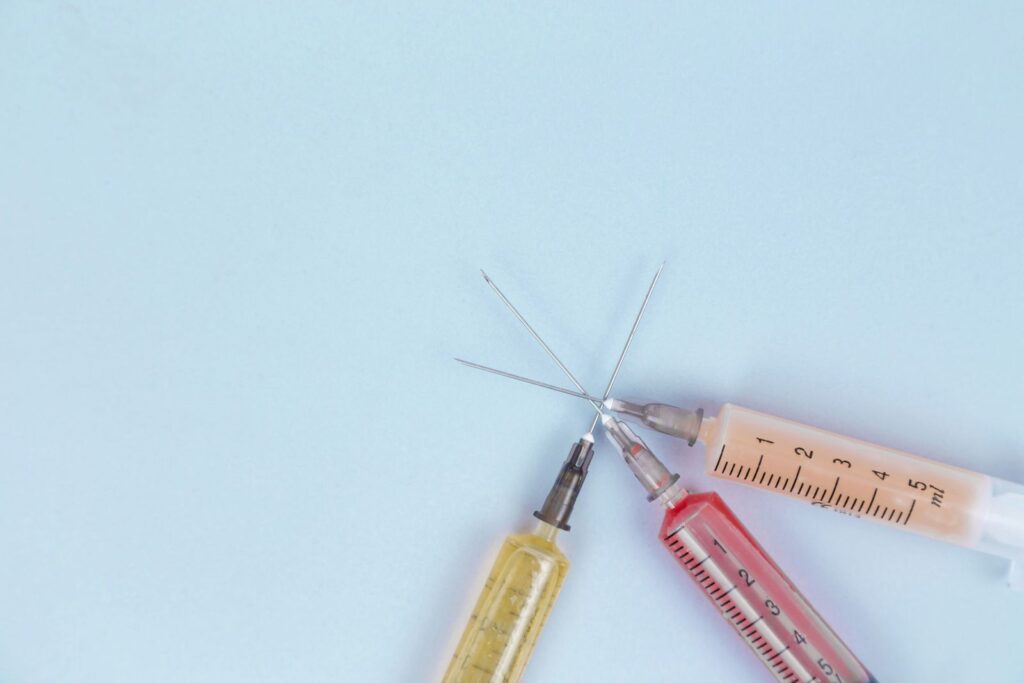
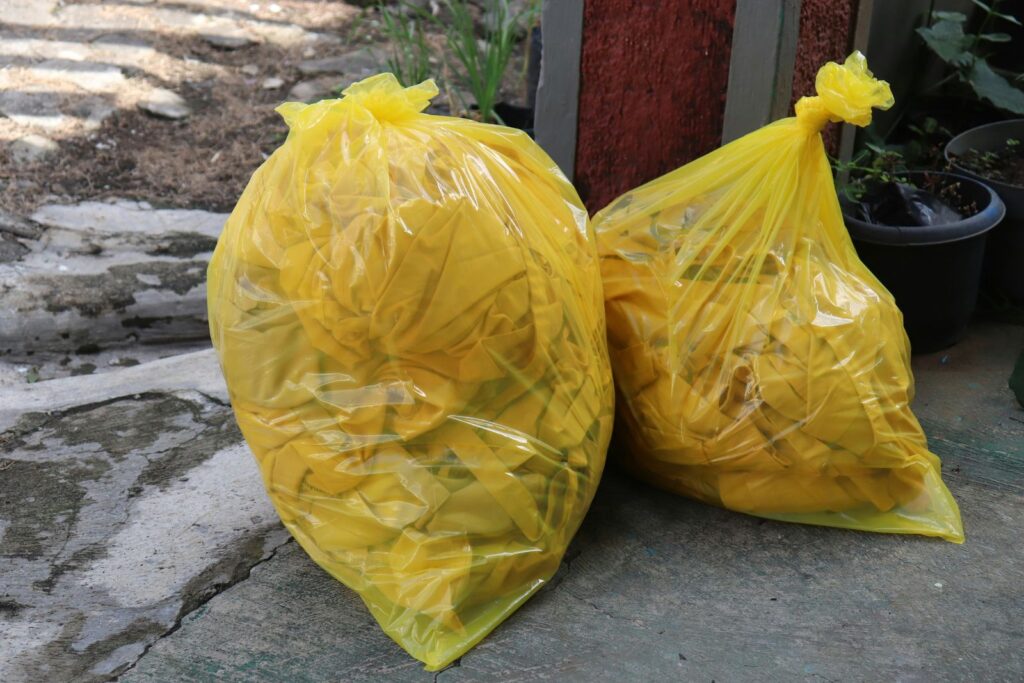
Schedule I sorts biomedical waste into four colour categories, each with a container type and permitted treatment. Segregation must happen “at the point of generation”, and bags and containers must carry the labels in Schedule IV, which include a cytotoxic hazard symbol and the instruction “Handle with care”.
| Category | What goes in it | Container | Treatment and disposal |
|---|---|---|---|
| Yellow | Human and animal anatomical waste, soiled waste, expired or discarded medicines, chemical waste, contaminated linen, microbiology and other laboratory waste | Yellow non-chlorinated bags or containers | Incineration, plasma pyrolysis or deep burial; laboratory waste pre-treated on site |
| Red | Contaminated recyclable waste: tubing, bottles, IV sets, catheters, urine bags, syringes without needles, gloves | Red non-chlorinated bags or containers | Autoclave, microwave or hydroclave, then shredding; sent to registered recyclers or for energy recovery |
| White (translucent) | Sharps, including needles, scalpels and blades | Puncture-proof, leak-proof, tamper-proof containers | Autoclaving or dry heat sterilisation, then shredding or encapsulation; metal to foundries |
| Blue | Glassware and metallic body implants | Puncture-proof and leak-proof boxes or containers with blue marking (as amended in 2018) | Disinfection with sodium hypochlorite, or autoclaving, microwaving or hydroclaving, then recycling |
Some details matter for purchasing. Cytotoxic drugs and items contaminated with them must go back to the manufacturer or supplier, or to a CBWTF or hazardous waste facility, for incineration above 1,200 degrees C. Schedule I says plastic waste “should not be sent to landfill sites”. Deep burial “is permitted only in rural or remote areas where there is no access to common bio-medical waste treatment facility”. Chemical liquid waste goes to a separate collection system and must be pre-treated before mixing with other effluent.
What the BMW Rules require of a hospital
Rule 4 lists the duties of the occupier. The main ones are:
- Storage: a “safe, ventilated and secured location” for segregated waste, with no secondary handling, pilferage or spillage.
- Pre-treatment: laboratory waste, microbiological waste, blood samples and blood bags disinfected or sterilised on site; Rule 8 specifies sterilisation to Log 6 or disinfection to Log 4 under WHO guidelines.
- Storage time: untreated anatomical, soiled and biotechnology waste “shall not be stored beyond a period of forty-eight hours” without informing the prescribed authority.
- Bags: chlorinated plastic bags (excluding blood bags) and gloves phased out by 27 March 2019.
- People: training at induction and at least yearly, immunisation against hepatitis B and tetanus, health check-ups at induction and yearly, and protective equipment.
- Records: a biomedical waste register updated daily, a monthly record on the website for bedded facilities, and treatment equipment records kept for five years.
- Oversight: a committee that meets “once in every six months”, or, for establishments with fewer than thirty beds, a designated qualified person.
- Disclosure: bedded facilities of any size must publish the annual report on their website (Rule 4(p), as amended in 2019).
The occupier must also inform the prescribed authority immediately if the CBWTF does not collect waste on time, must not mix treated biomedical waste with municipal solid waste, and must segregate and neutralise liquid chemical waste at source. Under Schedule II as amended in 2018 and 2019, facilities with fewer than ten beds had until 31 December 2019 to meet the liquid waste discharge standard, and non-bedded occupiers must disinfect infectious liquid waste before disposal.
Barcoding and common biomedical waste treatment facilities
The rules are built around shared treatment. Rule 7(3) says no occupier may set up on-site treatment “if a service of common biomedical waste treatment facility is available at a distance of seventy-five kilometer”; on-site incinerators, autoclaves or shredders are allowed only where no CBWTF serves the area. The CBWTF operator must collect on time, including on holidays, keep a log for each machine, display its authorisation and annual report online, supply non-chlorinated coloured bags “on chargeable basis, if required”, and report occupiers who hand over unsegregated waste.
Rule 4(i) required every occupier to set up a barcode system for bags and containers leaving the premises, and Rule 5 required operators to add barcoding and GPS. The CPCB’s Guidelines for Bar Code System for Effective Management of Bio-medical Waste of April 2018 set the detail, with both sides to “implement barcode system by 27/03/2019”:
- Each label carries the colour category, a sequence number, an HCF code built from the facility name, PIN, state and facility type, and the location.
- The CBWTF installs and runs the barcode software, with free access for regulators, and issues label sequence numbers.
- Facilities with 30 or more beds must buy their own weighing machine and scanner and scan every bag before handover; smaller facilities are scanned by the operator.
- Every facility gets a receipt before the vehicle leaves, which should remain legible for five years.
- The operator re-scans all bags at the plant and must alert the state board if this has not happened within 24 hours of collection.
Authorisation, annual reports and accident reporting
Under Rule 10, every occupier or operator applies to the state board or committee in Form II and receives a provisional authorisation in Form III. For bedded facilities and CBWTFs, its validity “shall be synchronised with the validity of the consents” under the water and air laws. Non-bedded occupiers get a one-time authorisation, deemed granted if the authority does not object within ninety days. Any application must be decided within ninety days or is deemed granted, and any change in waste generation or handling needs a fresh Form II.
Reporting runs on a fixed annual cycle under Rule 13:
- By 30 June, every occupier and CBWTF operator submits an annual report in Form IV covering the previous calendar year.
- By 31 July, the state board compiles the information and sends it to the CPCB, in Form IVA since the 2018 amendment.
- By 31 August, the CPCB sends its analysis to the MoEFCC.
- The annual reports must also be available online on the websites of occupiers, state boards and the CPCB.
For a major accident, which the rules define to include “toppling of the truck carrying bio-medical waste” or release into a water body but not needle prick injuries, Rule 15 requires the authorised person to inform the authority immediately and send a written report on remedial steps “within twenty-four hours” in Form I. Information on all other accidents and the remedial steps taken goes in the annual report, under Rule 15(2).
All records of biomedical waste handling must be kept for five years and are open to inspection. A person aggrieved by an order of the authority can appeal in Form V to the state Secretary (Environment) within thirty days, and the appeal must be decided within ninety days.
Penalties and environmental compensation
Rule 18 makes the occupier or CBWTF operator “liable for all the damages caused to the environment or the public due to improper handling of bio- medical wastes”, and “liable for action under section 5 and section 15 of the Act”, meaning the Environment (Protection) Act, 1986, for any violation. State boards can also refuse, suspend or cancel an authorisation under Rule 10 after giving the applicant a hearing.
State boards can also levy environmental compensation. Guidelines issued by the Maharashtra Pollution Control Board, which its website dates 22 July 2019 and which followed a National Green Tribunal order of 12 March 2019 in O.A. No. 710 of 2017 (Shailesh Singh), calculate compensation for a healthcare facility in Maharashtra as health risk score times facility type times size factor times a rupee factor times days of violation, “not less than Rs.1200/- per day”. The formula for a CBWTF uses a pollution index, with a minimum of Rs 3,000 per day.
These are Maharashtra’s figures, not national rates. The guidelines say the tribunal directed the CPCB to prepare a compensation scale and that a state board may set its own, provided it is not lower than the CPCB’s, so amounts can differ between states.
The Maharashtra scores show what that regulator treats as most serious. For a healthcare facility, having no arrangement with a CBWTF scores 30 points, improper segregation 20, having no effluent treatment plant where one is required 15, and no authorisation, no pre-treatment or inadequate storage 10 each. The size factor rises from 0.20 for a facility of 1 to 10 beds to 2.00 for one with 500 beds or more. For a CBWTF, non-compliant incinerator emissions score 20 and failing to collect and dispose of waste within 48 hours scores 10.
How much biomedical waste India generates
National figures come from the CPCB, which compiles the annual reports that state boards forward to it. Its Annual Report on Biomedical Waste Management for the Year 2023, the latest national report we found on its site, says about 743 tonnes a day of biomedical waste was generated in 2023, of which 694 tonnes a day was treated and disposed of through CBWTFs and captive treatment facilities. It counts 234 CBWTFs in operation and 30 under construction, with cumulative capacity of 1,717 MT a day, made up of 990 MT a day of incineration and 727 MT a day of autoclave capacity.
The same report counts 4,34,966 healthcare facilities, 1,37,132 of them bedded and 2,97,584 non-bedded, of which 1,44,905 had obtained authorisation; 15,870, about 3.6%, have captive treatment facilities. It says only 43% of CBWTF treatment capacity is being used, while noting that availability of CBWTFs may vary at state level. One section of the report gives generation as 859 tonnes a day, which conflicts with the 743 figure used elsewhere in it.
National spare capacity does not mean local adequacy. A gap analysis by IIT Bombay for the Maharashtra board, published on the board’s website, counts 30 operating CBWTFs in the state, with consent to establish issued for 10 more. Using 2024 as the base year and projecting generation to 2034, it finds current shortfalls in both incinerator and autoclave capacity at Nagpur, Sangli and Talegaon, and says incinerators in Mumbai, Pune and Taloja ran 24 hours a day against the 20 hours a day allowed under their consent to operate.
A biomedical waste compliance checklist for hospitals
Drawn from the rules, their amendments and the CPCB barcode guidelines, this checklist covers the obligations an inspector will look for:
- Hold a valid authorisation in Form III, synchronised with water and air consents, and file a fresh Form II whenever waste handling changes (Rule 10).
- Have an arrangement with the CBWTF serving your area, or authorised on-site equipment if none is within 75 km (Rule 7).
- Segregate at source into the four Schedule I colours, using non-chlorinated bags and labelled containers (Rules 7 and 8).
- Pre-treat laboratory and microbiology waste on site before handover (Rules 4 and 8).
- Keep a secure, ventilated storage area and never hold untreated anatomical or soiled waste beyond 48 hours (Rules 4 and 8).
- Barcode every bag leaving the premises; with 30 or more beds, scan and weigh before handover and keep receipts for five years (CPCB, 2018).
- Treat or neutralise liquid chemical waste and meet the liquid waste discharge standard (Schedule II).
- Train, immunise and health-check every worker who handles waste, and record it for the annual report (Rule 4).
- Update the waste register daily and, if bedded, post the monthly record online (Rule 4, as amended in 2019).
- Hold a waste management committee meeting every six months, or designate a qualified person below 30 beds (Rule 4).
- File Form IV by 30 June, publish it on your website if you are a bedded facility, and report any major accident in Form I within 24 hours (Rules 4, 13 and 15).
- Keep all biomedical waste and treatment records for five years (Rules 4 and 14).
What the biomedical waste rules mean for operators and suppliers
For hospitals, biomedical waste is a cost that public payers will not reimburse separately. The CGHS rate memorandum of 3 October 2025 lists “Biomedical waste management” among the components of room rent and says they “must not be charged separately under any circumstances”, so CGHS-empanelled hospitals must absorb the cost within ward charges.
The rules also shape what hospitals buy: non-chlorinated bags that meet Bureau of Indian Standards or plastic waste rules requirements, puncture-proof sharps containers, on-site autoclaves for laboratory waste, barcode labels and, for facilities with 30 or more beds, scanners and weighing machines. Operators may supply bags “on chargeable basis”, and under the CPCB guidelines facilities buy barcode labels or pre-printed bags from the operator or an approved vendor, so the CBWTF is a supplier as well as a service provider.
For investors in treatment capacity, the gap between national surplus and local shortfall is the signal. Maharashtra has issued consent for 10 new CBWTFs. Bed growth is the other variable; our report on CBRE’s estimate of India’s hospital bed needs to 2035 sets out one projection of that growth.
What to watch next
- Annual cycle: Form IV reports for calendar 2026 are due by 30 June 2027, and the CPCB’s national compilation follows by 31 August.
- Capacity plans: whether states follow Maharashtra in commissioning gap analyses and approving new CBWTFs where incinerators run beyond their limits.
- National data: the latest CPCB national report we found covers calendar 2023; later compilations will show whether only 43% of CBWTF capacity is still in use.
- Amendments: the April 2026 amendment, as summarised by TeamLease RegTech, changed committee membership rather than facility duties; any further MoEFCC notification could change the checklist above.
We record new notifications and enforcement actions on The Tracker, and Maharashtra’s documents remain available on the MPCB biomedical waste page.
Questions readers ask
What are the colour codes for biomedical waste in India?
Schedule I of the Bio-Medical Waste Management Rules, 2016 uses four categories. Yellow is for anatomical, soiled, chemical, pharmaceutical and laboratory waste; red for contaminated recyclable items such as tubing, catheters and gloves; white translucent containers for sharps; and blue-marked containers for glassware and metallic implants. Each category has its own permitted treatment and disposal methods.
How long can biomedical waste be stored in a hospital?
Rule 8 says untreated human anatomical waste, animal anatomical waste, soiled waste and biotechnology waste shall not be stored beyond 48 hours. If longer storage becomes necessary, the occupier must take measures to protect health and the environment and inform the prescribed authority, which is the state pollution control board, giving the reasons.
Do small clinics need biomedical waste authorisation?
Yes. Rule 10 requires every occupier handling biomedical waste, irrespective of the quantity, to apply in Form II to the state pollution control board or committee. Non-bedded occupiers receive a one-time authorisation, which is deemed granted if the authority does not object within ninety days of a complete application. Bedded facilities hold authorisations synchronised with their consents.
When is the biomedical waste annual report due?
Under Rule 13, every occupier and common treatment facility operator must submit an annual report in Form IV to the prescribed authority on or before 30 June each year, covering the previous calendar year. State boards send compiled data to the CPCB by 31 July, and the CPCB reports to the environment ministry by 31 August. Reports must also be published online.
Can a hospital run its own biomedical waste incinerator?
Only where no common facility serves it. Rule 7 says no occupier shall establish on-site treatment and disposal if a common biomedical waste treatment facility is available within seventy-five kilometres. Where none is available, the occupier must install treatment equipment such as an incinerator, autoclave or microwave and shredder, as authorised by the prescribed authority.
What is the penalty for violating biomedical waste rules?
Rule 18 makes occupiers and operators liable for damage caused by improper handling and for action under sections 5 and 15 of the Environment (Protection) Act, 1986. State boards also levy environmental compensation. In Maharashtra, the state board's guidelines, issued after a 2019 NGT order, set at least Rs 1,200 a day for healthcare facilities and Rs 3,000 a day for treatment facilities; other state boards may set their own scales, not lower than the CPCB's.
How much biomedical waste does India generate?
The CPCB's Annual Report on Biomedical Waste Management for the Year 2023 says about 743 tonnes a day was generated, of which 694 tonnes a day was treated and disposed of. It counts 234 common treatment facilities in operation and 30 under construction, with cumulative capacity of 1,717 MT a day, and 4,34,966 healthcare facilities, 1,37,132 of them bedded.
Sources
Announced plans, figures and dates are as stated in the sources below at the time of publication and can change. Conclusions drawn from them are our reading.
- MoEFCC: Bio-Medical Waste Management Rules, 2016, G.S.R. 343(E) (copy published by Maharashtra Pollution Control Board) (PDF, 28 March 2016)
- MoEFCC: Bio-Medical Waste Management (Amendment) Rules, 2018, G.S.R. 234(E) (copy published by Maharashtra Pollution Control Board) (PDF, 16 March 2018)
- MoEFCC: Bio-Medical Waste Management (Amendment) Rules, 2019, G.S.R. 129(E) (copy published by Maharashtra Pollution Control Board) (PDF, 19 February 2019)
- MoEFCC: Bio-Medical Waste Management (Second Amendment) Rules, 2019, G.S.R. 360(E) (copy published by Maharashtra Pollution Control Board) (PDF, 10 May 2019)
- CPCB: Guidelines for Bar Code System for Effective Management of Bio-medical Waste (copy published by Maharashtra Pollution Control Board) (PDF, April 2018)
- Maharashtra Pollution Control Board: Guidelines for imposition of environmental compensation against HCFs and CBWTFs (PDF; dated 22 July 2019 on the MPCB biomedical waste page)
- CPCB: Annual Report on Biomedical Waste Management for the Year 2023 (PDF)
- TeamLease RegTech: Bio-Medical Waste Management (Amendment) Rules, 2026 (21 April 2026; summary of G.S.R. 293(E))
- IndiaMedToday: Ayush Dept representatives mandated in state panels for bio-medical waste management (22 April 2026)
- IIT Bombay for MPCB: Present and future gap analysis for biomedical waste management in Maharashtra (PDF)
- Maharashtra Pollution Control Board: Biomedical waste page
- CGHS: Office memorandum of 3 October 2025 on CGHS rates (copy hosted by Raman Research Institute) (PDF, Annexure III)
Follow The Healthcare Daily on Google News
New stories appear where you already read the news.
The Healthcare Daily. We report from primary sources and list them on every story.