From the archive. Published on 29 December 2022 and not updated since. Figures and job titles may have changed.
The states with the highest shortfall of doctors - Uttar Pradesh, Chhattisgarh, Odisha, and Madhya Pradesh - house a huge share of India’s rural population of more than 0.8 billion.
While Delhi has the highest number of doctors working in the public healthcare sector in India, Goa has the highest number of registered doctors, with a doctor-to-population ratio of almost 2: 1000. Incidentally, Goa is the first Indian state to become free of COVID-19, with no active cases.
Given that Primary Healthcare Centres (PHCs) are the basic structural and functional unit of public health services, it is important to ensure that India starts by addressing the shortage of doctors in that area.
Demand-Supply Gap in Healthcare
As per the 2018 government data, 10 Indian states face a shortage of doctors at the PHC level. Bafflingly, in most Indian states, the government has sanctioned more than the required number of doctors and in many states, the PHCs have more doctors than needed! The need of the hour is to address this demand-supply mismatch in healthcare infrastructure.
It is essential to realize that these numbers are the best-case scenarios when our doctors are available at their full potential. Many hospitals are already having doctors work in shifts to decrease the risk of infection.
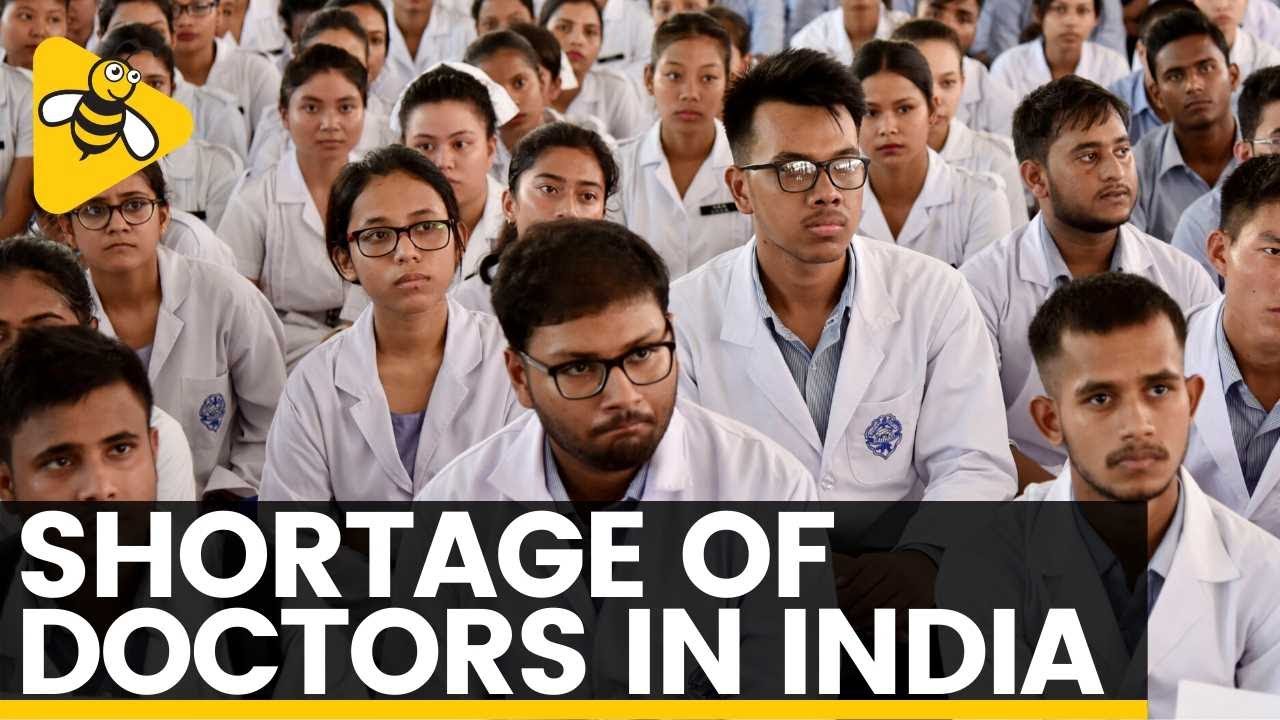
Yet, there are reports every day of doctors contracting the virus and having to quarantine themselves. Unless all states meet at least the basic healthcare requirements - in terms of the number of doctors, personal protective equipment (PPEs), etc - the country cannot possibly tackle the pandemic.
In India, there is one doctor for every 1,457 people as per the country’s current population estimate of 1.35 billion, which is lower than the World Health Organisation norm of 1:1000, the government has informed Parliament.
A little over 11.57 lakh allopathic doctors are registered with the state medical councils and the Medical Council of India as of January 31, and assuming 80 percent availability, it is estimated that around 9.26 lakh doctors may be actually available for active service, Minister of State for Health Ashwini Choubey said, “Assuming 80 pc availability, it is estimated that around 6.30 lakh Ayurveda, Unani and Homeopathy (AUH) doctors may be actually available for service and considered together with allopathic doctors, it gives a doctor population ratio of 1:868,” he added.
The minister elaborated on the steps taken by the government to increase the number of doctors, which include increasing undergraduate seats, enhancement of maximum intake capacity at the MBBS level from 150 to 250, and relaxation in the norms of setting up medical colleges in terms of the requirement for land, faculty, staff, bed/bed strength and other infrastructure.
Follow The Healthcare Daily on Google News
New stories appear where you already read the news.
The Healthcare Daily. We report from primary sources and list them on every story.